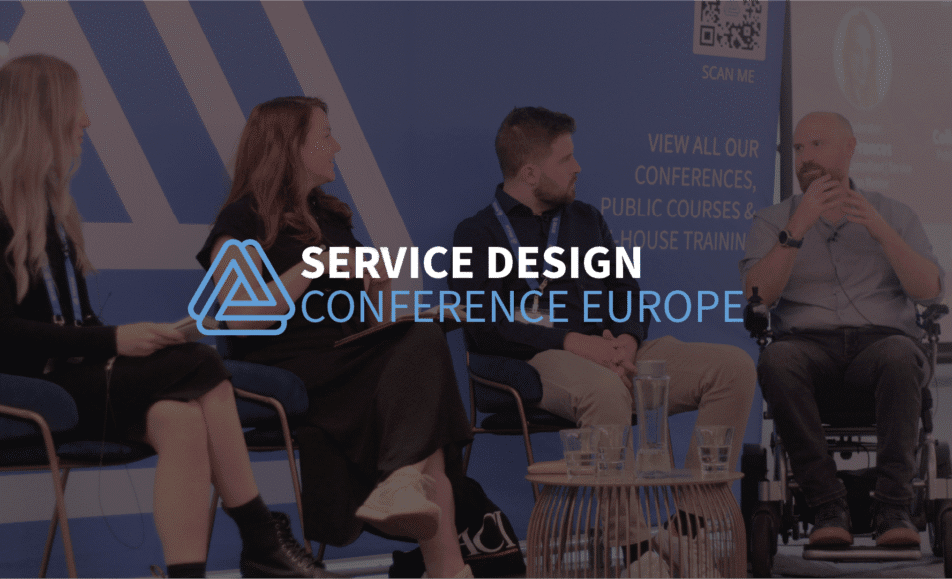
Join us at the Service Design Conference Europe 2025. This event offers a transformative experience, redefining your understanding of Service Design and its impact on innovation and organisational success.
Embrace the transformative power of the Fourth Industrial Revolution and its sweeping impact on the workplace, leadership, and organizational design. This keynote unpacks highlights from the new book Humans Robots Agents, exploring practical strategies to embrace innovation, navigate complexity, and harness AI to thrive in an era of unprecedented change.
Learning Objectives:
1. Understand AI's Role in New Ways of Working: Identify how technology reshapes traditional business structures and decision-making processes.
2. Embrace Disruptive Innovation: Learn actionable approaches to lead change and be the disruptor rather than embracing change and be the disrupted.
3. Cultivate New Skills and Mindsets: Explore the shift towards multi-skilled (M-skilled) workers and leadership adaptability in AI-driven ecosystems.
4. Design for a Dynamic Future: Discover patterns and practices for building vital, dynamic, versatile, and ethically conscious organizations.
Speakers:

The transformational change domain has seen the introduction of a variety of new roles in recent years including roles aligned with service design, business architecture and change management. Some traditional roles required to deliver change successfully have been poorly understood and this ambiguity combined with role proliferation has led to a sense of uncertainty and confusion.
Building on the original business analysis service framework, this keynote will introduce a service view of core change professions and will clarify where they are distinct and where collaboration opportunities exist. Key takeaways:
• Benefits of a service paradigm
• Service frameworks for key roles in transformational change
• Opportunities offered by change co-creation

The talk explores whether strategy design is the new frontier for service design. It covers emergent strategy practice - informed by service design - as experienced through development of a new CDIO Operational Strategy at HMRC. This is considered within the context of limitations from traditional strategy development approaches, the Cynefin framework for understanding complexity in strategy development, and where the application of design thinking and service design approaches may be useful more broadly. The presentation also covers the ‘Shu Ha Ri’ stages of wisdom in relation to the use of design tools in strategy creation. Finally, it argues that extending service design into strategy creation offers a unique opportunity for both service designers and organisations to provide better value to customers and stakeholders.
Key takeaways:
• Service Design can play a crucial role in developing better strategy.
• Design thinking enables understanding of the business coupled with generation of innovation and creativity in strategic choices.
• The design toolkit is a valuable starting point for articulating and developing strategy.
• Opening up career paths from Service Design to strategy creates opportunities to move from design to leadership.

In the last few years of my work teaching service design I found that the one source I kept quoting and recommending to students who wanted to learn their subject had nothing to do with service design. Or so you’d think.
In this talk I will take some of the key moments of Douglas Adams’s The HitchHiker’s Guide to the Galaxy and demonstrate the lessons it holds for the unsuspecting service designer.
You’ll see how the Total Reality Vortex can actually blow people’s minds, why the ‘Somebody Else’s Problem’ field is an allegory for why service design is so difficult, and the lessons we can take from the Magratheans’ attempts to work out the answer to life, the universe, and everything.
Key messages:
- When service design gets stressful, the only thing you can do is laugh
- The worst place to learn about service designers is from books about service design
- Don’t panic

According to one well-known definition, a service is something that helps the user to get something done. We talk about an “end-to-end” service. In many ways, this is a helpful perspective, as it helps us to focus on clear objectives. However, it implies a one-off, transactional relationship between the user and provider. It that really what they both want?
Using examples from real-world experience, Nick will discuss the drivers for both approaches, their relative advantages and disadvantages, and their implications. We will look at:
- The project pressures and constraints that encourage teams to frame a service as a transaction, when it would be more appropriate to think of it as an ongoing relationship
- The underlying psychology of being a service user
- The commercial benefits of a relational service framing
- Practical guidelines for evaluating and improving the relational experience for service users.

Join us for an engaging and insightful presentation on the Medway 2.0 project, which aims to enhance public services through innovative service design and digital technologies. Medway Council revamped their "report it" service pattern, focusing on the "Nuisance Vehicles" process, using systems like JADU and Microsoft technologies to create a seamless, user-centric experience. This led to improved service delivery, significant efficiencies, and cost savings – removing or automating 75% of the manual interventions for the service!
Key takeaways include:
• Service Design Principles in Action: Applying the 15 universal principles of good service design.
• Technology and Automation: Enhancing back-office functions with JADU and Microsoft technologies and future proofing for AI.
• User-Centric Approach: Designing services that meet residents' needs.
• Collaboration and Training: Investing in training and collaboration across departments.
• Scalability and Future Applications: Replicating the "report it" service pattern for other services like litter, graffiti, and potholes.


Service Design exists across physical, digital, and mental touchpoints. But, when it comes to digital experiences, service design is often not thought of first. Many other design disciplines come to mind: UX, UI, experience, interaction, etc. It can be difficult to define where exactly service design fits with all of the specialized positions. However, SD has one big advantage: we don’t exist in silos. Omnichannel design requires not only an understanding of digital experiences and interactions, but how all of these interactions work within one another and the systems they are a part of. When rethinking how users are interacting with digital interfaces, it’s imperative to consider how SD could fold into the overall design equation, ultimately seeking to improve the experience of everyone who touches the interface.
- SD is for everything. Think of it as connective tissue’ between different systems, services, interfaces, etc. It inherently has a place in optimizing digital design.
- SD distinguishes itself from other forms of digital design by our lenses. We look above the platform and across more, often connecting dots and filling gaps across omnichannel approaches.
- SD for digital product improvement is going to be fundamentally different from designing a new brand experience. The service shouldn’t be different, but the systems in which you are working will change how you get to the ideal service experience.
- These SD tools offer a more ‘birds-eye’ view of the experience.
o E2E Journey-Mapping
o Service-Blueprinting
o Ecosystem-Mapping
o Diverging and Convergent Thinking Workshops

Imagine an organization where retiring experts' decades of wisdom seamlessly fuses with Gen Z's digital fluency and AI capabilities - creating an unstoppable force for innovation. While most companies panic about "brain drain" as Baby Boomers retire, pioneering organizations are orchestrating something revolutionary: a knowledge ecosystem that combines human intelligence with AI enhancement. Through compelling case studies from Dell and IBM, we'll reveal how forward-thinking leaders are turning generational differences into their secret weapon. This isn't just about preventing knowledge loss - it's about igniting an explosive acceleration in capabilities that neither humans nor AI could achieve alone. You'll discover practical frameworks for creating dynamic knowledge bridges that turn the generational transition into your biggest competitive advantage.
Key Takeaways:
- Create AI-enhanced systems that capture and amplify critical organizational knowledge
- Build cross-generational mentoring programs that leverage both human wisdom and digital capabilities
- Implement practical frameworks for scaling knowledge transfer across hybrid teams
- Design sustainable knowledge-sharing practices that increase innovation and performance
- Deploy strategies that build psychological safety and trust between generations while integrating AI

June 17, 2025
09:10 - 09:55
Plenary Keynote: Changing Your Brain – Coping With Significant Life Change
In this sequel to ‘The Power of Change’ David continues his story of living with Parkinson’s Disease, describing his decision to undergo life-changing brain surgery and the lessons he learnt as he prepared for the procedure. He will share several techniques that worked for him in terms of embracing this experience and overcoming the fears it provoked, in the hope that they may be of some use to others in mastering challenges they face.
In his uniquely humorous way David will explain (amongst other things):
Why fear of change is like a rubber shark
What he learnt by being afraid of needles
How an obscure Samurai principle helped him overcome resistance to change
What ‘The Matrix’ can teach us about life’s challenges
David will conclude by explaining how his experiences have given him a renewed sense of purpose and how you can positively utilise the power of change in your life. Despite this being chronologically a ‘sequel’ to ‘The Power of Change’ this presentation is also a stand-alone session. You don’t have to have seen the first one to understand the second!

This talk will explore methods and approaches to building a productive ‘service ecosystem’, taking lessons from a long term project to transform the back office planning service for UK local authorities. We will share learning about how we embedded agile principles amongst planning teams to create a ‘team that can build’, coaching users in design methodology and collaborative approaches to drive service transformation. We’ll then talk about how we worked with multiple stakeholders across central and local government and other suppliers to create the conditions for a viable, adaptable service that can scale and flourish in a complex public sector environment. Using a 'from this to this' framework, we'll show the audience how we built a productive service ecosystem from the ground up.
Takeaways include:
Example methods for building confidence amongst users to participate in service design
Provocations on the responsibilities of service designers in creating viable, sustainable products
Examples of designers and developers working in parallel to establish agile working amongst organisations with low digital maturity
Insights into creating shared services and products across multi-agency organisations
Visual representation of shifting roles and responsibilities of the wider team, including users (planners), Product Owners and other decision makers


Great ideas to improve the customer experience often seem simple at first glance—but turning them into reality is a different story. The true challenge lies in bridging the gap between inspiration and implementation, especially when success requires collaboration across multiple layers and functions of an organisation. This talk explores how Service Design provides the tools and frameworks to navigate this complexity, aligning teams and processes to deliver delightful customer experiences. Learn how to move beyond ideation to create meaningful, impactful solutions that resonate with your customers.
In this talk you'll learn more about:
* How one company took a 'simple' idea and scaled it to delight millions of customers worldwide
* The different approaches to bringing service design into your organisation
* The 'mindset - tools - skills' framework to start building service design literacy
Speakers:

In this panel discussion, we’ll explore the diverse career paths that lead people into the field of Service Design, shedding light on how individuals from various backgrounds and disciplines transition into this profession. The conversation will focus on the importance of continuous learning, the value of “learning as you go”, and how professionals can improve the maturity of their own practice over time.
The panel will feature a mix of both new and seasoned practitioners who have taken unconventional routes to becoming Service Designers, sharing their unique journeys, challenges, and key turning points. We’ll also discuss the role of professional qualifications in Service Design, examining whether formal certifications or experience-driven learning is most beneficial to career development.
Key topics will include:
• The diverse entry points into Service Design, from design backgrounds to technology and business.
• How to build a robust foundation in Service Design through hands-on experience and ongoing learning.
• Strategies for maturing your practice, including mentorship, community engagement, and self-reflection.
• A spotlight on individuals who have forged their own paths into the discipline, sharing lessons learned and insights for others.
This conversation will offer valuable perspectives for both newcomers exploring Service Design as a career, and established professionals seeking to elevate their practice.
Inherent to any human-centred service is a chain of user interactions and thus, behavioural changes. Many services are developed with a clear behaviour change objective, such as the intention for healthier habit formation in their users. Oftentimes in design though, the objective is simply to increase adoption or user engagement with services, but this too (and often unknowingly) is a task of influencing behaviour. Design teams often overlook the opportunity to dig deeper into users' decision-making and behavioural influencers and thus, miss the chance to design more positive, long-lasting change for service users (and stakeholders).
Reframing design challenges as behavioural problems encourages us to go beyond standard user research/testing focused on usability and functionality and unpack the influence of internal and external influencers on user interactions. This talk will bring theory to life and leave you with actionable insights, examples and Behavioural Science frameworks that empower you to create more engaging and transformative experiences for your users.
Key Takeaways:
- What is Behavioural Design
- Why applying Behavioural Science helps us to create better services and experiences
- How to design for behaviour change (6 steps to follow in any behavioural design project)
- Practical Behavioural Science concepts and frameworks to apply to your own work