The Digital Twin Organisation: Why Your AI Strategy Should Include a Mirror
Every organisation I work with right now is having the same conversation about AI. Where to deploy it. What to automate. Which functions to augment first? The energy is almost entirely outward-facing — AI for customers, AI for operations, AI for products.
Very few leadership teams are asking a more fundamental question: what if you pointed that same capability inward, at the organisation itself?
Not at what you deliver. At how you function?
Here’s the thing. If you’re already introducing AI across your business, you’re already building the infrastructure to do exactly that. Your AI tools, collaboration platforms and people systems are generating enormous amounts of data about how your organisation works. The data is flowing. The analytical capability exists. You just aren’t connecting it.
That’s where the concept of the digital twin organisation stops being theoretical and starts being urgent — and it belongs at the heart of your AI strategy, not bolted on as a separate initiative later.
The most important thing AI can help you understand is not your market. It’s your organisation.
The AI conversation is only half-complete
In engineering and manufacturing, digital twins have been mainstream for years. A virtual replica of a jet engine or supply chain, continuously fed by sensor data, allows engineers to predict failures, test scenarios, and optimise performance without touching the physical asset.
Now apply that logic to an organisation.
We’re adopting AI at pace — but almost exclusively to transform what we deliver, not how we function. We’re investing heavily in AI-powered customer experiences and automated workflows, while continuing to manage our own organisational dynamics with periodic surveys, annual reviews and gut-feel diagnostics.
The irony is hard to miss. We’re building sophisticated AI models to understand our customers and markets, while remaining remarkably unsophisticated about understanding ourselves.
We generate enormous amounts of data about how our organisations actually work — through profiling tools, employee surveys, decision logs, meeting recordings, performance metrics and the digital footprint of every AI tool we introduce. The problem isn’t a lack of data. It’s that we rarely connect it into a coherent, dynamic picture. We sequence interventions based on experience and instinct rather than evidence. And we struggle to see the connections between leadership behaviours, team dynamics and organisational outcomes until problems become crises.
We are data-rich and insight-poor about the one system that determines whether everything else works.
What a digital twin of an organisation actually looks like
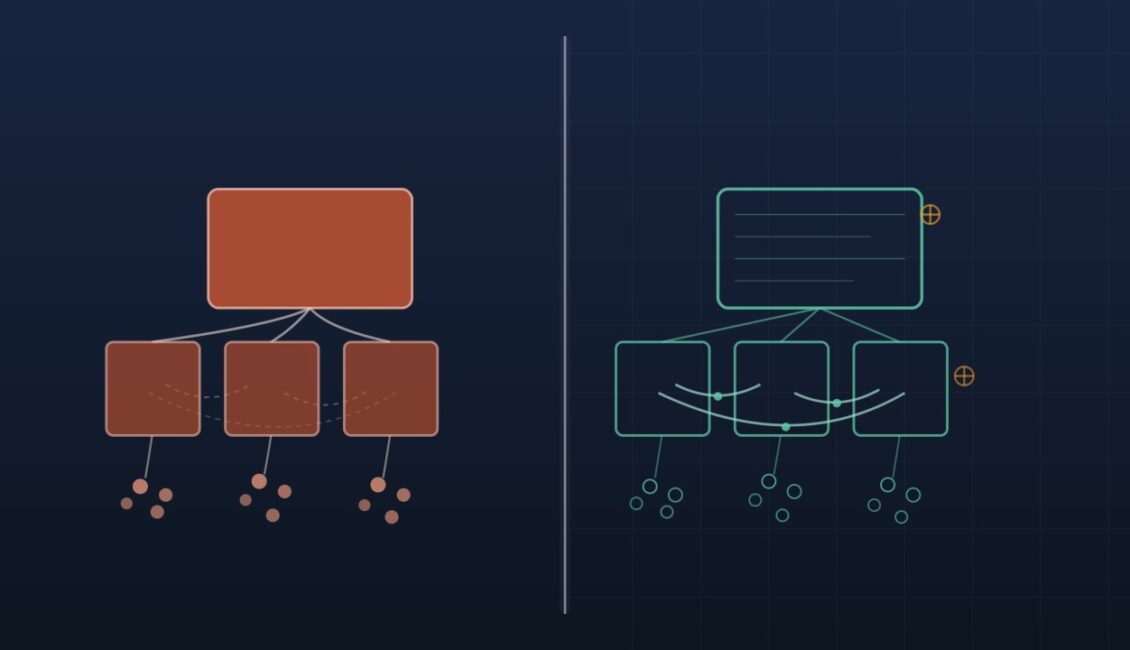
A digital twin organisation isn’t a dashboard. It’s an integrated, continuously updated model that creates a dynamic representation of how an organisation actually functions — surfacing both the technical and behavioural dimensions of performance.
It draws on three types of data. Structured data from profiling instruments, psychometric assessments, engagement surveys and performance metrics — the quantitative backbone. Semi-structured data from interview findings, decision logs, workshop outputs and feedback captured during transformation programmes — rich in context but hard to aggregate at scale. And unstructured data from meeting recordings, internal communications and the informal signals that reveal how an organisation actually operates, as opposed to how it says it does.
When these data streams are connected, the model moves through three layers of increasing value.
At the descriptive layer, leaders gain a rich, real-time diagnostic across leadership effectiveness, team energy and organisational alignment — a step change from the typical six-month survey cycle.
At the predictive layer, the model identifies patterns and root causes invisible to even the most experienced leader. Decision bottlenecks. Cultural misalignment between functions. Early signs of change fatigue before they show up in attrition data.
At the prescriptive layer — and this is where it gets genuinely interesting — the model can sequence targeted interventions and recommend next best actions. Scenario modelling allows leaders to test hypothetical changes — new team structures, different role responsibilities, increased coaching investment — before committing resources. Rather than launching a broad change programme and hoping it lands, you focus energy where it will have the greatest impact.
The AI tools you’re already deploying are generating precisely the data that makes this possible. The question is whether anyone is connecting it.
Why this matters: adaptability, speed and resilience
Most organisations were not designed to be adaptive. They were designed for consistency and control. Functions are siloed. Governance is hierarchical. Decision-making follows procedures optimised for risk reduction. These structures serve operational continuity, but they actively hinder the responsiveness that continuous transformation demands.
Organisations are, in reality, complex adaptive systems — networks of interconnected people, teams, processes and cultures that are constantly shifting. Change in one area ripples unpredictably through others. The introduction of AI itself is a profound change event, reshaping roles, decision-making and ways of working at speed. Leaders are being asked to transform while they operate, and the organisations they’re transforming are shifting beneath their feet.
A digital twin helps leaders navigate this complexity in three ways.
It increases adaptability by making the invisible visible. Most organisations understand their formal structures. Far fewer have a clear picture of how decisions actually get made, where energy concentrates or dissipates, or which cultural norms are quietly undermining strategic intent. A continuously updated model surfaces these dynamics — the informal networks, the behavioural patterns, the misalignments between stated values and lived culture — in ways that periodic diagnostics simply cannot.
It increases the speed and success of change by enabling precision over programme. Change management has historically been delivered in broad strokes — organisation-wide campaigns, cascaded training, engagement initiatives that treat the whole organisation as a single unit. A digital twin allows leaders to be surgical: identifying the specific teams, functions or leadership behaviours where intervention will have the greatest leverage, and tailoring the approach accordingly. It also compresses the feedback loop — from months to near-real-time — so leaders can adjust before momentum is lost.
It builds organisational resilience through modelling and foresight. Rather than reacting to problems after they surface, leaders can stress-test decisions, anticipate the knock-on effects of structural changes, and identify vulnerabilities before they become crises. The twin becomes a living laboratory for the organisation — a space where leaders can explore ‘what if’ questions with evidence, not just instinct.
Speed without understanding is not an advantage. It’s a risk multiplier.
The leadership imperative
None of this works without the right leadership. A digital twin demands leaders who can operate across two modes simultaneously — maintaining operational stability while driving transformational change. The literature calls this ambidexterity. In practice, it means leaders who can set direction and structure when clarity is needed, and step back to enable autonomy, experimentation and team-led innovation when the situation demands it.
When the model shows a team struggling with execution, that’s a signal for operational leadership. When it reveals cultural resistance to a new way of working, it calls for transformational leadership. The twin doesn’t replace leadership judgment — it informs it with a depth and timeliness that wasn’t previously possible.
Culturally, the shift is equally significant. I think of it as a shift across three lenses: mindset, from risk-averse to learning-oriented; toolset, from intuition-based to evidence-based; and skillset, from functional expertise to adaptive, cross-disciplinary capability. Organisations built on precedent and predictability need to develop genuine comfort with experimentation, structured risk-taking and data-informed decision-making.
Without this readiness, even the most sophisticated digital twin becomes an expensive mirror that nobody wants to look into.
Where to start
If you’re already introducing AI into your organisation — and most leaders are — the building blocks for a digital twin are closer than you think. Don’t treat this as a separate initiative. Treat it as a natural extension of the AI strategy you’re already executing.
Three questions worth sitting with:
What data are your AI tools, collaboration platforms and people systems already generating about how your organisation functions — and how much of it is actually connected?
Where are the decisions that would most benefit from a living, evidence-based view? Start there, rather than trying to model everything at once.
And critically: is your leadership team willing to act on what a digital twin might reveal — including the uncomfortable findings? Without that commitment, the technology is academic.
The digital twin organisation isn’t a futuristic concept. The data exists. The analytical capability exists. And with AI now embedded across the business, the infrastructure to connect it all is already taking shape.
What’s often missing is the willingness to look in the mirror — and the leadership courage to act on what it shows.
The organisations that will win with AI won’t just be the ones that deploy it outward. They’ll be the ones brave enough to turn it inward – to look in the mirror.
What’s your experience? Are you seeing organisations invest in understanding how they function — or just in what they deliver? I’d be interested in your perspective.
#DigitalTwin #AIStrategy #ChangeManagement
About the Author
Paul West is the Founder of SKIPTA Consulting and President and Chair of the Change Management Institute. He works with boards and leadership teams to build the conditions for sustained performance — through clarity, alignment, and the development of leaders who can navigate complexity.