Integrating Data and AI Governance—Or Not?
2026, Irina Steenbeek, Managing Director, Data Crossroads
Industry trends shaping data and AI governance alignment
Industry discussions around aligning data and AI governance have intensified recently. Growing AI adoption, increasing regulatory scrutiny, and heightened expectations for accountability are prompting organisations to rethink how governance frameworks are designed and integrated. Yet recent industry polling highlights a persistent gap between strategic intent and operational reality.
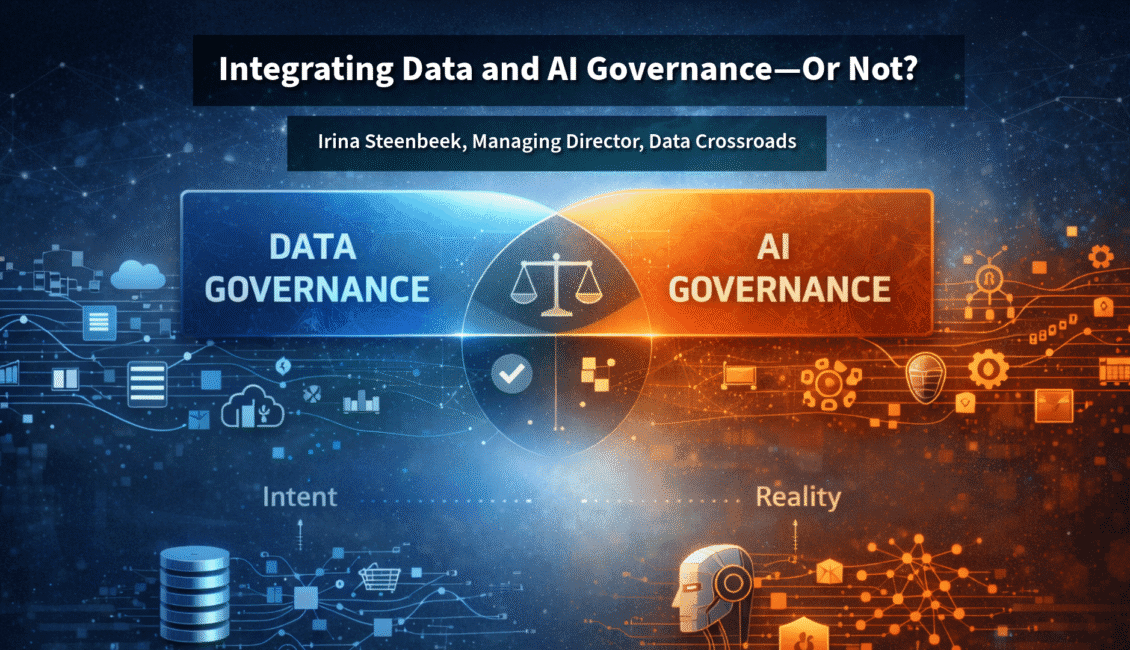
Figure 1: Integration of data and AI governance: intent vs. practice.
As shown in Figure 1, a clear majority of respondents believe that data and AI governance should be integrated. At a conceptual level, integration is increasingly viewed as necessary to manage shared risks related to data quality, transparency, compliance, and decision accountability. This reflects a growing understanding that AI governance cannot be effective without strong data governance foundations.
In practice, however, the situation looks very different. Many organisations still report having only a data governance framework in place, while AI governance remains informal or undeveloped. Others indicate that both frameworks exist but are not integrated. Figure 1 illustrates that, although the need for integration is widely recognised, its execution lags significantly behind ambition.
The underlying reasons become clearer when examining implementation challenges.
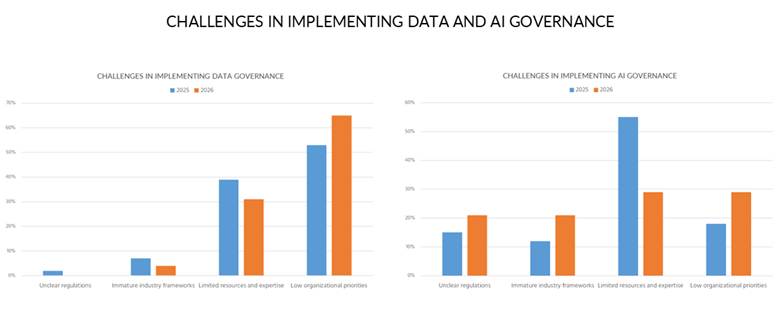
Figure 2: Trends in data and AI governance implementation challenges.
Figure 2 shows that data governance is primarily constrained by organisational factors, particularly limited prioritisation and resource constraints. AI governance, by contrast, is more strongly affected by uncertainty, including unclear regulations and immature industry frameworks.
Taken together, these trends suggest that integration is less a question of agreement and more a matter of alignment between organisational readiness and maturity.
Key factors influencing the level of integration
Decisions about data and AI integration and governance are shaped by several interrelated factors, beginning with business strategy and performance goals. Many organisations see integration as a way to reduce overlap, improve efficiency, and ensure consistent use of data across business and AI initiatives. The promise is attractive: innovation that moves faster while remaining compliant. For leaders focused on responsible growth, this alignment often feels like a strategic advantage. Yet ambition alone rarely guarantees success.
Regulatory pressure is another decisive influence. Emerging legislation, including the EU AI Act, increasingly expects organisations to manage AI risks through structured processes that begin with data. Data governance already addresses elements such as quality, lineage, and metadata, making it a natural foundation. Integration can therefore create a more unified compliance infrastructure. At the same time, it expands governance responsibilities to include models, algorithms, and outcomes, significantly widening the scope.
Organisational structure and culture further shape integration choices. Data and AI are often managed by separate teams with different tools, budgets, and priorities. Alignment requires a shift away from ownership debates toward shared accountability for outcomes. In practice, cultural barriers tend to outweigh technical ones.
Finally, technology maturity matters. While governance tools have evolved separately, emerging solutions increasingly bridge metadata, lineage, and model governance. Integration becomes feasible when workflows—and collaboration—evolve alongside them.
Integration is ultimately a contextual balance, not a fixed destination.
Weighing the pros and cons of integration
Integrating data and AI governance offers clear advantages, which explains why many organisations are drawn to the idea. A shared governance approach can reduce duplication, streamline decision-making, and establish a more consistent approach to managing data, models, and risks. When alignment is effective, it supports innovation while maintaining control, helping organisations move faster without sacrificing transparency or accountability. Integration can also improve regulatory confidence by presenting a coherent governance story rather than fragmented controls.
At the same time, integration introduces real trade-offs. Expanding governance to cover both data and AI inevitably increases scope and complexity. What once focused on datasets, roles, and processes now extends to models, algorithms, and outcomes. This can stretch already limited resources and blur responsibilities if boundaries are not clearly defined. There is also a risk of over-engineering governance, slowing innovation through excessive controls or one-size-fits-all rules.
The challenge, therefore, is not choosing between integration and separation in absolute terms. It lies in finding an approach that balances efficiency with clarity, innovation with oversight, and ambition with organisational readiness. Integration delivers value when it is intentional and proportionate, not when it is pursued as an end in itself.
Deciding how to integrate in practice
Determining the right level of integration between data and AI governance is less about adopting a predefined model and more about following a structured decision process. Integration works best when it emerges from informed choices rather than assumptions or trends.
The process starts with understanding the organisation’s strategy and culture. When governance initiatives are disconnected from business goals or everyday behaviours, they quickly become symbolic. Exploring strategic priorities, risk tolerance, and cultural habits helps reveal where governance can genuinely support progress. This grounding translates governance into clearly defined business use cases.
From there, data and AI strategies need to be developed in harmony. When data governance is created in isolation, it often emphasises control, whereas AI initiatives focus on innovation. Aligning both under a shared business vision clarifies how data enables AI and how AI amplifies the value of data.
Regulatory understanding forms the next foundation. Mapping applicable data and AI regulations, alongside relevant frameworks, provides clarity and prevents costly rework. Integrating these insights with enterprise risk management ensures that data and AI risks are visible and actionable.
The final steps focus on defining capabilities and scope. By deciding which capabilities are shared, which remain distinct, and how broadly integration should apply, organisations turn analysis into sustainable execution—achieving coherence without unnecessary complexity.
This decision logic and its practical application are explored in greater depth during my workshop at the IRM UK Data and AI Governance Conference. The approach is also detailed in my book, Aligning Data and AI Governance, where the decision process is presented as a structured, real-world guide.
To explore these ideas in more depth, join Irina Steenbeek at the Data Governance, AI Governance and Master Data Management Conference Europe, where she will lead the session Aligning Data and AI Governance Framework on Wednesday, 25 March 2026 in London.
In this practical session, Irina will walk through how organisations can design an integrated governance framework that brings data and AI governance together, aligning policies, roles, processes, and governing bodies into a single, coherent operating model. Attendees will gain clear guidance on when and how to integrate frameworks, avoid duplication, and build governance that is both compliant and scalable.
If you are navigating AI adoption while strengthening or establishing data governance, this session offers a clear, pragmatic roadmap.
Find out more here: Conference
Purchase your tickets here: Tickets