By Nigel Turner, Principal Consultant, Global Data Strategy, Ltd
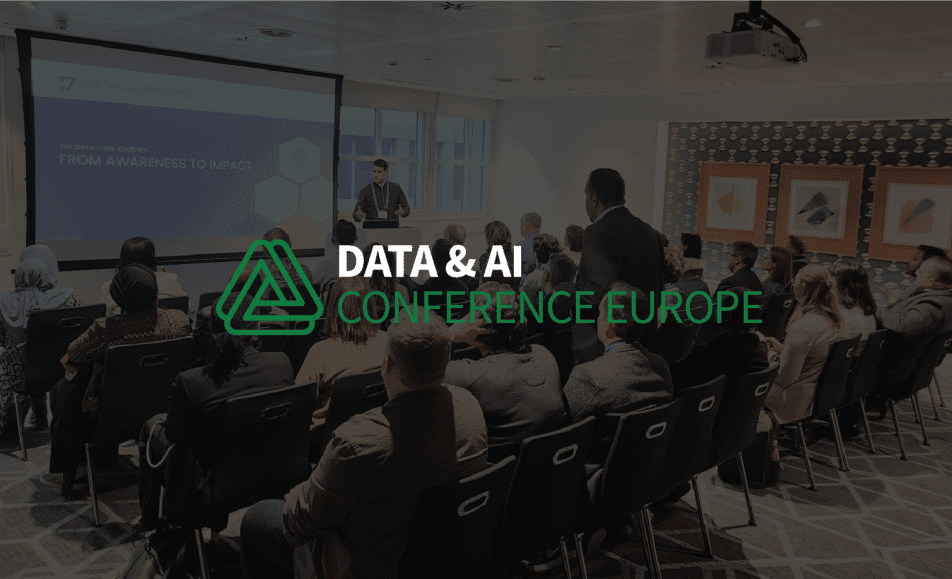
In my role as a committee member of the Data Management Association of the UK (DAMA UK) I was recently involved in organising the first ever DAMA face to face event in Northern Ireland with colleagues from DAMA Ireland. The event was held in the city of Belfast, famous amongst other things for being the place where the Titanic was constructed. At the time it was the largest ship ever built, but we all know that it tragically sank on its maiden voyage in 1912 after it hit an iceberg in the north Atlantic.
The main theme of the event was to explore how organisations can avoid similar disasters when it comes to launching Artificial Intelligence (AI) initiatives. A range of presenters from industry, academia and research institutions provided their advice and insights on the day’s main topic.[1] All speakers agreed that the AI ship has truly set sail and is on a course to become the latest revolutionary technology innovation of our time. A recent Global Data Strategy white paper Trends in Artificial Intelligence (AI) surveyed over 50 companies globally in April 2025 found that 75% had already embarked on their AI voyages. There appears to be no turning back.
So, what were my key learning points from the day in Belfast which any organisation introducing AI needs to consider to ensure a smooth passage to the AI new world?
- With AI, always start with Why and not What. The key AI driver should first be to define desired business outcomes and apply AI accordingly where it is appropriate. Too many are implementing AI simply because it exists, but this will inevitably lead to many failures and disappointments. Rigorous business cases are required to ensure AI delivers the business benefits its advocates will claim.
- Every speaker highlighted the critical dependency of AI on data, but also how AI can be an ally to drive organisations to enhance their data management capabilities. As one speaker said, ‘Get your data AI ready’ is a mantra that is already catching the ear of senior executives and so can help promote investment in data quality and other data management capabilities. Data that is not AI ready will lead to bad decisions and business outcomes, and ultimately to failed AI projects. There was a consensus that AI can also help data management by amplifying, exposing and potentially helping to fix data problems. The key message is to ensure that any AI project should have an underlying data improvement workstream to ensure success. This will require AI and data people to work together. A particular focus was also on the critical importance of getting master and reference data right for AI, as its quality and trustworthiness is critical as many AI algorithms will depend on the accuracy of critical data fields such as customer ID, product code, cost centre etc. Others stressed the growing importance of well-managed data catalogues as key tools in helping to underpin AI effectively as they document and help navigate the pathways of data discovery. They also help to ensure transparency as they can track data lineage.
- Debates about the interaction between AI and people was a recurring theme of the day. Keeping the human in the loop (HITL) is vital as people can supply the context and ‘common sense’ needed to keep AI on track. This is particularly true with ‘edge use cases’ where AI encounters new scenarios that it has not been previously trained on. Here AI is most likely to fail or mislead, so human insight and involvement is essential. Humans must remain in charge, with the discretion to make decisions and change course, rather than defer to AI as a default arbiter.
- It was striking that when the discussion turned to governance there was a strong overlap and synergy between the challenges of AI and data governance. Data governance provides an essential foundation of AI by aiming to ensure data accountability is at its core. Data owners should be the arbiters of what AI can, and cannot do, with the data they are responsible for. It is therefore vital that data and AI governance frameworks should be closely aligned and integrated into a single set of aligned policies and practices. Anything else is a recipe for disaster.
- Overall, it was also stressed many times during the day that data governance should be seen as an accelerator of AI, and not a brake. Organisations already struggling to implement and enforce data governance are most likely to fail with AI and vice versa.
Like the Titanic in its day, AI is seen as a modern technological marvel that can change the world. But to avoid icebergs ensure an integration of AI and data capabilities, enforce close collaboration between AI and data teams, and execute projects as a joint AI and data venture. Only this will guarantee that the AI ship will safely navigate the choppy waters. As one Belfast speaker concluded, “There are no shortcuts to anywhere worth going’.
[1] The agenda and all presentations from the day can be found at https://www.dama-uk.org/events/the-ai-dataverse-navigating-the-new-frontier
Nigel Turner will be teaching Data Governance: A Practical Guide from 19 – 20 May online. To book this online courses, please visit here.